Posts

Making Choices

Image
Our artistic careers are a series of choices that we make: go to this school, learn this style, take that gig, turn this other gig down, go for the money, go for the art, etc. Lots of choices that form a path we take. And it's easy to look at someone else's choices and say they “sold out,” or they made a wrong choice. But we don't live their life, we don't know their circumstances. If you have a family of young kids, you may take any and all gig offers so that you can put food on the table. If you are single, or just have a spouse, you may have the luxury of choosing what gigs to take. Or maybe you just love playing and take all the gigs because it's an adventure. Or you might decide to only take gigs within a certain style. The thing is, the choices are always yours and no one else's.     I know that I can look at other artists and think, “I wouldn't have made that choice.” But that doesn't need to be a criticism on their choice, because I'...

Working Through Creative Blocks

Image
It's happened to all of us, things are going along fine, you are successfully doing your music/art, and then suddenly things stop. You have no ideas, you have no inspiration, you have no energy to go on. The Artist's nightmare: hitting a brick wall… You feel like you've hit a brick wall. All your hard work and momentum stops. Try as you might, you can't get going again. Things are at a standstill.  What do you do? Don't panic. Realize this is normal and happens to everyone at sometime. Refrain from getting angry or frustrated. This only deepens the block. Introduce a disruption/distraction to what you are doing: go to the beach/park/forest, or go to the cinema/concert/museum. This can help reset your brain and creativity. Take a nap. Another way to reset. Take a walk and leave your phone at home. Get out of your workspace and get some fresh air and exercise. This can help clear your head and reset your brain. Realize that most blocks are imaginary...

The Importance of Phrasing

Image
Today's post is directed primarily at the drum set player. Many of today's players develop amazing technical proficiency through hours and hours of practice. But just what do they practice? Most drummers seem to concentrate on 2 main things: Pure technique, like triplets or paradiddles around the drums, double bass chops, speed and precision. Beat/rhythms/grooves. This is all well and good, as we need to master many of these skills, but I've seen too many young drummers concentrate strictly on these. When it comes to playing in a band, they have the technique, but not the means to successfully apply it to the music in a musical way. They often end up sounding like they are playing exercises out of a drum book, which is what they are doing. You can learn to be a better drummer by listening to great singers… I'm all for technique, but not at the sacrifice of the music. An important thing for drummers to do is to listen to both singers and horn players. T...

The Importance of Creating Your Own Musical Voice

Image
Think about your favorite musicians or bands. What is it you like about them? It's probably something they do differently than others, something that you like that's easily identifiable. One thing that is easily identifiable is their  sound.  The recently departed BB King had a guitar sound you could easily identify. You'd never mistake him for Eddie VanHalen, even if they were playing together. Think about the sound of drummers you know. Ginger Baker is always Ginger, with his tubby, thuddy sort of drum sound. Joe Morello's sound was always tight & crisp, yet full. John Bonham always had that full, larger than life drum sound. Bill Bruford always has that cracking snare drum sound. The same goes for licks/beats/rhythms/grooves. Tony Williams—you can always tell it's Tony by his flam triplets. Or Neil Peart by his cascading tom fills. Or Bernard Purdie by his impeccable shuffle. Or Levon Helm by his deep, soulful groove. Be a drummer, not this… The 1s...

The Art Of Discipline Playing Live

Image
As drummers/musicians, we spend years and years practicing in our basements/bedrooms/practice rooms. In fact, we spend the majority of our careers practicing somewhere. Our actual time performing live, on stage, is but a small percentage of what we do. So often when we finally do get to perform on a stage, many of us just want to cut loose, and play with total abandon and/or volume, because, we are like like a pent up race horse finally let out on the track. But when playing live, this is the time we  should , no, must have the most discipline! It's all fine and dandy to play whatever you want, however you want, in the privacy of your own rehearsal syudio. And that's good. That is a time to experiment, try out new ideas, and just let it rip sometimes. But being on stage is another beast entirely. Performing live requires a modicum  of self  discipline and editing. If every musician comes up on stage, especially in an improvising setting, with the idea th...

A Sextuplet Exercise

Image
It's been a while since I posted a blog that featured an actual notated drum exercise, so I thought I would post something I've been using with my students. Here is a rather simple sextuplet exercise that is great for right & left hand balance, and is also a great warm up (play on pad, drum, hand drum, etc.). It's a repeating 5-bar exercise where each bar changes the sticking for the note pattern: Here's the quick breakdown for each measure: Single strokes starting with the Right Hand. Paradiddle-diddles. Double Paradiddles - notice that the ending 8th notes are L R, so that the next measure starts with the Left Hand. Double strokes. Single Paradiddles - notice that the last paradiddle is 2-16ths & 2-8ths. This leads to the repeat starting with the Left Hand. As drummers, we often tend to accent the 1st note of a given note group, like a sextuplet.  There are no accents here.   Play each note the same and make each measure sound the sa...

Burning Down The House

Image
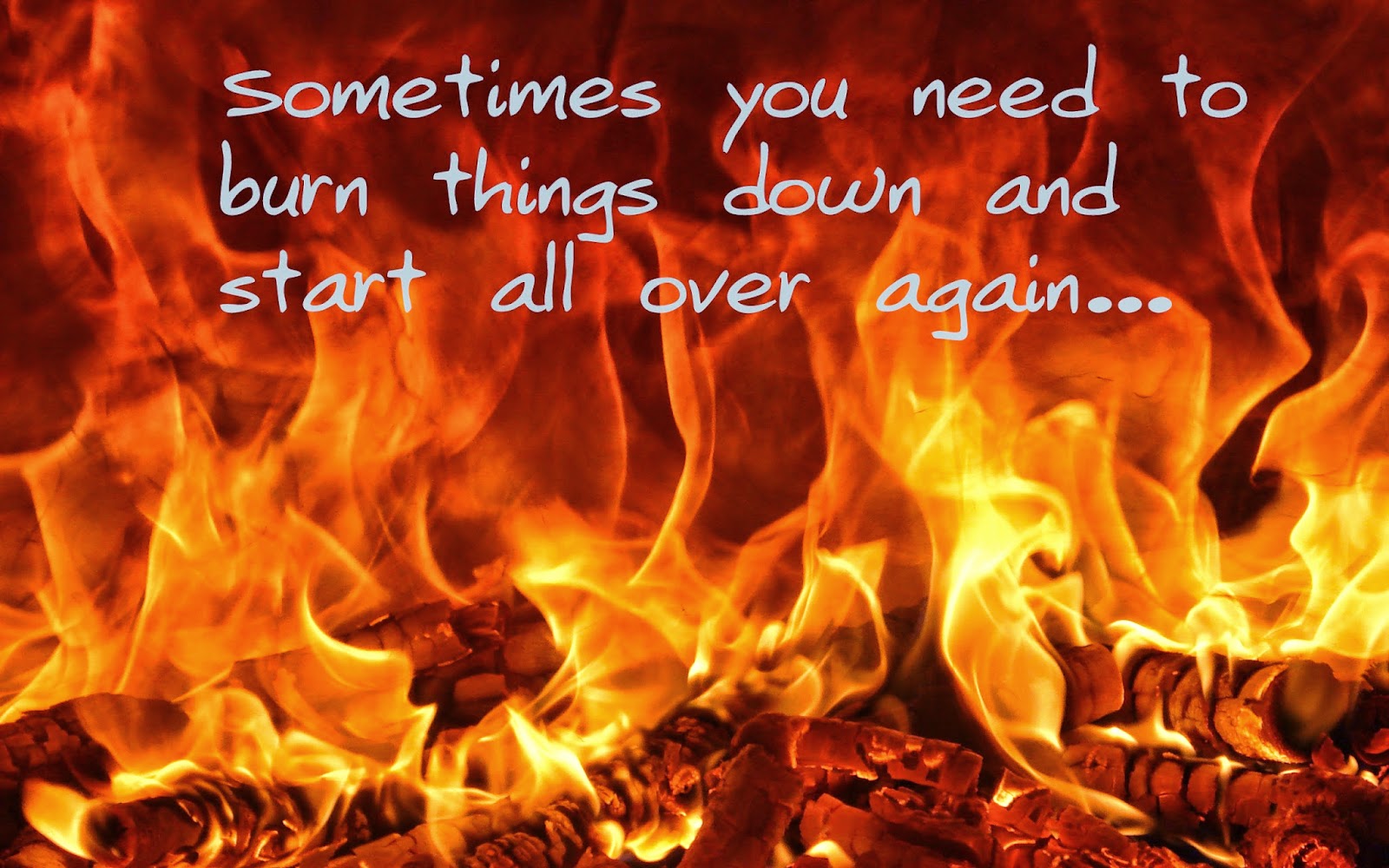
We've all been there: dead ends, wrong turns, failed ideas. Sometimes you just have to be willing to start over, go back to square one. There's nothing wrong with that. The best and most successful people in history have all failed at one time or another.  The trick is knowing when to stop, when to say no more. Sometimes you have the greatest idea, you work and work on it, yet it still doesn't become something usable.  Stop. Take a serious look at it. If the idea just doesn't work, toss it. If the idea is still good, file it away for the future. Nature does this. When a forest or prairie becomes too congested, a fire comes along to clear out the debris and overgrowth so new life and healthy plants can thrive.  Sometimes we accumulate too much baggage along our journey. Baggage of ideas. Baggage of thoughts. Baggage of rhythms. These can clog our thinking and lead us into repetition of old ideas and stagnation of creativity. Don't be af...