Posts

Do The Practice

Image
In the best selling book, Outliers: The Story Of Success , Malcolm Gladwell has written about the popular theory of The 10,000 Hour Rule . The idea is that for success, you need to put in around 10,000 hours of practicing a specific task. This idea has both its champions and detractors. In many ways, it's a very general, simplification of how to be successful. But putting in 10,000 hours is only a part of story. It certainly helps to have some sort of natural talent in the area you are pursuing. I could put in 10,000 hours of drumming practice (and probably have over the years), but I will never be on the same level as someone like Vinnie Colaiuta. I know Vinnie worked hard, practicing all the time in his younger days, but he also just has a natural gift for playing drums and playing seemingly impossible rhythms.  Similarly, as much as I love ice hockey, even with 10,000 hours of working on it I could never be a professional hockey player. I could make a list of all my other inte...
The Benefit of Self Recording

Image
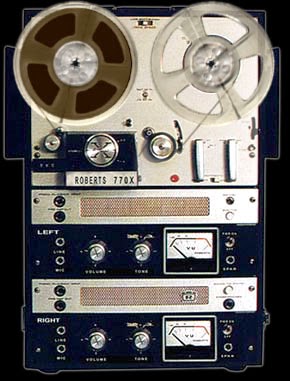
Things have come a long way since I started playing music. One thing that has been consistent, has been my recording of most gigs that I have played. Back in the '70s, I would drag along a well worn cassette recorder to record gigs. I wasn't looking to capture anything that I would ever release to the public, but I wanted to be able to hear what was going on in my bands and the the music we played.  I later moved up to a very heavy, very unwieldly reel-to-reel recorder, the Roberts 770X. I still have it and boxes of 7" reel tapes from back in the day. Later I moved into a Sony Walkman recorder that traveled with me everywhere (I did a lot of magazine interviews with that). Eventually, I moved up to a small Yamaha digital recorder, and now a ZOOM digital. The mighty 770X - 48 pounds of recording machinery… And today it's inexpensive to buy a small, quality digital recorder that you can use to record both rehearsal/practice sessions, and live performances. By r...

The Lasting Affect of King Crimson

Image
It was 30 years ago that I wrote a Style & Analysis column on Bill Bruford for Modern Drummer magazine. In the column, I transcribed various sections of his drumming with YES, UK, and King Crimson. The response to that one column was huge. This lead me to talking to Bill after a Moraz/Bruford concert here in Milwaukee, and proposing to do a whole book of charts from Bill's various bands he had played in. In his quiet English demeanor, he said, “Do you really think there's a need for it?” I assured him there was, even showing him some of the letters I had received about the column. He said he would “think on it.” The next night, before his show in Chicago, he called me on the phone and very enthusiastically said, “Let's do it!” He then started rattling off a list of songs that he thought I should transcribe.  This became a 4-year project of transcribing, then sending things to him via post (this is before e-mail) for him to check out and make any corrections. As can ...

Out of the Safety Zone

Image
Drummers generally have it safe. We are usually stuck in the back, with a wall of instruments around us, like a barrier between us and the rest of the musicians and the audience. We are safe in our cocoons. We are also usually supporting the other musicians and the music, so what we play underpins things, rather than being the focus. In some ways it's easier to be in the back. You don't have to worry about leading, or being the center of things. If you play drum set, y ou also are able to sit back and just groove (which is still a lot of work, but not being the center of things). In the groove, in the pocket. I have nothing against that. In fact, I'm always in awe of players who have a deep groove. But again, this is a supportive role. It's easy to find a groove and just sit there. A good groove can go on forever. Drums & percussion have a long history of supporting everything with a groove. But what if you do something different and step out front, out of your sa...

Finding Your Own Sound With Any Instrument

Image
Syncronicity was at work this week. A week ago I was talking with fellow drummer, Ari Moosavi about drummers having their own sound. Ari is a great drummer with a distinctive sound. His cymbals are some old, cheap Japanese ones. The sound is very dry, very distinctive. The cool thing about them is that they don't sound like a million other drummer's cymbals. And Ari can make some beautiful music with them. So if anything, they are very Ari sounding . I've had this discussion with various other drummers over the years, and recently again on Facebook. Sometimes it's come to the point of arguing about which is more important to getting a drummer's sound: the gear, or the drummer. My personal feeling is that, all things equal, 90% of your sound comes from you . It comes from how you hit/strike/touch the instruments.  It comes from  t he amount of pressure/force you play with.  It comes from  w here you strike things. And it even  comes from  the notes/rhyth...

Be the person you’d hire if it were your gig or session.

Image
Be the person you’d hire if it were your gig or session. That sounds simple, but it's not always that simple. The big assumption here is that you've got your act together and are professional in every sense. Now put yourself in the place of the bandleader. The usual things you would look for in hiring someone would be things like: they get to the gig on time, they can play well, they can play the music style/s called for, they are easy to work with, they don't have any drug or alcohol problems, and possibly that they can read music.  If it's an audition you are going to and there are songs to know, KNOW THEM! Don't just show up thinking you can fake your way through it. Auditions are tedious and draining. The last thing a band or band leader wants to put up with, is time wasters who really shouldn't be auditioning. Be courteous, be professional, and most importantly, be prepared. From there, it's all about context . Put yourself in the posit...

8 Simple Things To Hinder Your career

Ah, being a musician is the life. You work hard at it, and the rewards can be many. But a simple misstep can throw it all away in an instant.    Here is a short list of things NOT to do: Don't break your word. A promise is a promise. I learned the hard way. I once begged off a gig I was committed to because I had received a "better offer." Well, things didn't work out quite the way I had hoped. The gig I left apparently didn't go so well without me and I lost a friend because of it. The "better" gig I took turned out to be rather lame and wasn't better at all. Lesson learned… Don't act like a star/diva/jerk/dick head. No matter what term you use, nobody likes to work with someone who thinks they are bigger and better than those around them. This goes for band mates, managers, promoters, and even fans. Treat all people you meet with decency—that will go a long way and be remembered. Don't think you are too big/good enough you don't...