Posts

The Nostalgia of Hand Hammering

So, it's come up again on a drum forum, the debate of hand hammered vs machine hammered cymbals. And of course being the person that I am, with a very strong opinion, I couldn't leave well enough alone, so I jumped into the debate. I keep asking myself, "Why does it matter?" But apparently in my mind, it does. So here's my thoughts/theories/impressions for the 593rd time. On the surface, hand hammering is all about nostalgia and the warm, fuzzy feelings it brings us. This is the same sort of thing we get in the LP vs CD debate. Nostalgia. The human being is very complex, and a big part of that complexity is memory and the emotions associated with those memories. Let's face it, when you think of some old guy swinging a hammer at a piece of bronze, pounding it into shape, that's a very nostalgic, even romantic, thought. I'm sure it triggers some sort of emotional response and you feel happy. Add to this the related memories we have of great drummer...
Break It Down To Build It Up Again

I'm working on some new music, getting ready to record. I've got a title for the whole project, it's a theme really. And I have a vision in my mind of sort of how it will be, but I'm leaving everything open so that it will become what it becomes.  One thing I'm sure of, it will be different. Why should I do the same thing again? I already did it. So I'm designing things, set ups of instruments, a new drum set, new instruments to build even. I haven't physically played even one note, but I've played them all in my mind.  I've always thought that I don't compose as much as I channel these sounds, these patterns, from some other realm. They often appear wholly formed, complete; all I need is to grab them and get them down. At other times I open the channel and things just pour though me. I don't even know what's happened until I'm finished and I listen to it.  One thing I've learned over the years is to get out of the way! Thin...

What Am I Trying to Do Here?

Why in the world do I take the time to write this blog? I certainly don't need to hear myself talk, or more correctly, read my own writing. But I've been involved in music most of my life, and in that time I've been fortunate enough to not only be a musician, but to also write about music, interview musicians, sell musical instruments, manufacture musical instruments, teach & lecture about music, compose & produce music, and a lot of other connected activities.  Now I'm not saying I'm any better at anything than anyone else, but I do have a wide view perspective on drums & music, and I try to keep my finger on the pulse of things. So, this little corner of blogdom is just me trying to pass on relevant information, wisdom, and hopefully, inspiration, for you readers out there. And please remember, unless you take a minute to comment, I'm just talking to myself… ~ MB BTW, please have a look at my revamped website:  www.gongtopia.com

The Rebellion Is On

Image
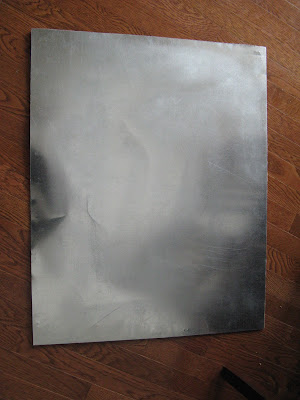
I've always been a rebel. Even in high school and university, I was not satisfied with the norm. For whatever reason, I always heard different sounds in my head. As a percussionist, this meant that I often heard some pretty crazy sounds. I've been known to show up to gigs with totally crazy set ups because, well, because those were the sounds I was hearing in my head at the time. At university, I recall asking my percussion instructor, "What do you know about using sheet metal as percussion?" At the next lesson, she handed me the score for John Cage's ' First Construction (In Metal) '—the rebellion was on. I headed down to the closet sheet metal fabricator, had them cut some metal sheets of various sizes, and promptly gigged with them. I still have a sheet of prized 24x36" textured aluminum that I got out of the scrap pile at a club I was playing at in 1975 that was remodeling. It has served me faithfully all these nearly 40 years. I've since ac...

Ground Zero

Image
Where do you start?  Where do you draw inspiration from?  Where does the rhythm come from? Stop, Look, Listen Most of us tend to draw from outside ourselves, finding inspiration in other musicians, in other music. We often copy what we've heard before, changing it to suit our needs, but still looking outside ourselves for inspiration. If you've played your instrument for a number of years and reached a certain level of proficiency, then you have everything you need inside yourself. The next time you go to play/practice, stop and sit for a moment, meditating & listening to what you hear inside. Listen for what you really feel. Then when you play, let that be your guide and play yourself .  Follow the inner muse… ~ MB

Sometimes It's The Little Things

Image
After teaching for so many years, I've found that it's often the little things that make a difference. If you are having trouble with your playing, or not making progress as quickly as you had hoped, check out the little things: Check your GRIP: are you tensing up/squeezing your hand in some way? This will restrict the stick and also can cause cramps/stiffness in your muscles. Loosen up and let things move naturally. SEAT HEIGHT: are you uncomfortable sitting, or do you feel off balance? Check your seat height. You should be balanced, stable, and not leaning in any direction. Move your seat up/down 1" at a time, leaving it for a few hours/days, before you change it again. You want to try it for an extended period of time to see what difference it makes. Then change it another inch and see what that is like. When you hit the sweet spot , you will usually know after playing for a while. You might want to move another inch to see how that is, then move back if that's ...

Stand Up & Deconstruct Yourself

Image
I've been playing drum set for 40+ years—that's a lot of sitting down. And while sitting is cool, and let's you play with all 4 limbs at once, it is also restrictive. In sitting, we are locked into the instruments basically within your reach. We are also, in many ways, locked into the traditional drum set arrangement. You can try to cram more stuff in front of you, but there are practical limits. The epiphany came to me 10 years ago when I decided to stand up and abandon the traditional drum set configuration. I also decided to abandon the traditional sound vocabulary: why should I be locked into such a rigid framework?  My basic set up is a 20" single-head bass drum mounted horizontally on a rack—I can play it with sticks/mallets, or use it as a sound table by placing objects/small percussion on it. I can also scrape/rub/hit things on the head/rim/sides. Around the drum, I can add various cymbals and toms/snares as needed for the gig. I also have 2 percussion tab...